
Project Plesiosaur
El Quartelejo Museum and Jerry Thomas Gallery and Collection
Step Inside the Fossil Lab
Experience a unique opportunity to step inside an active fossil preparation lab as part of your visit to El Quartelejo Museum.
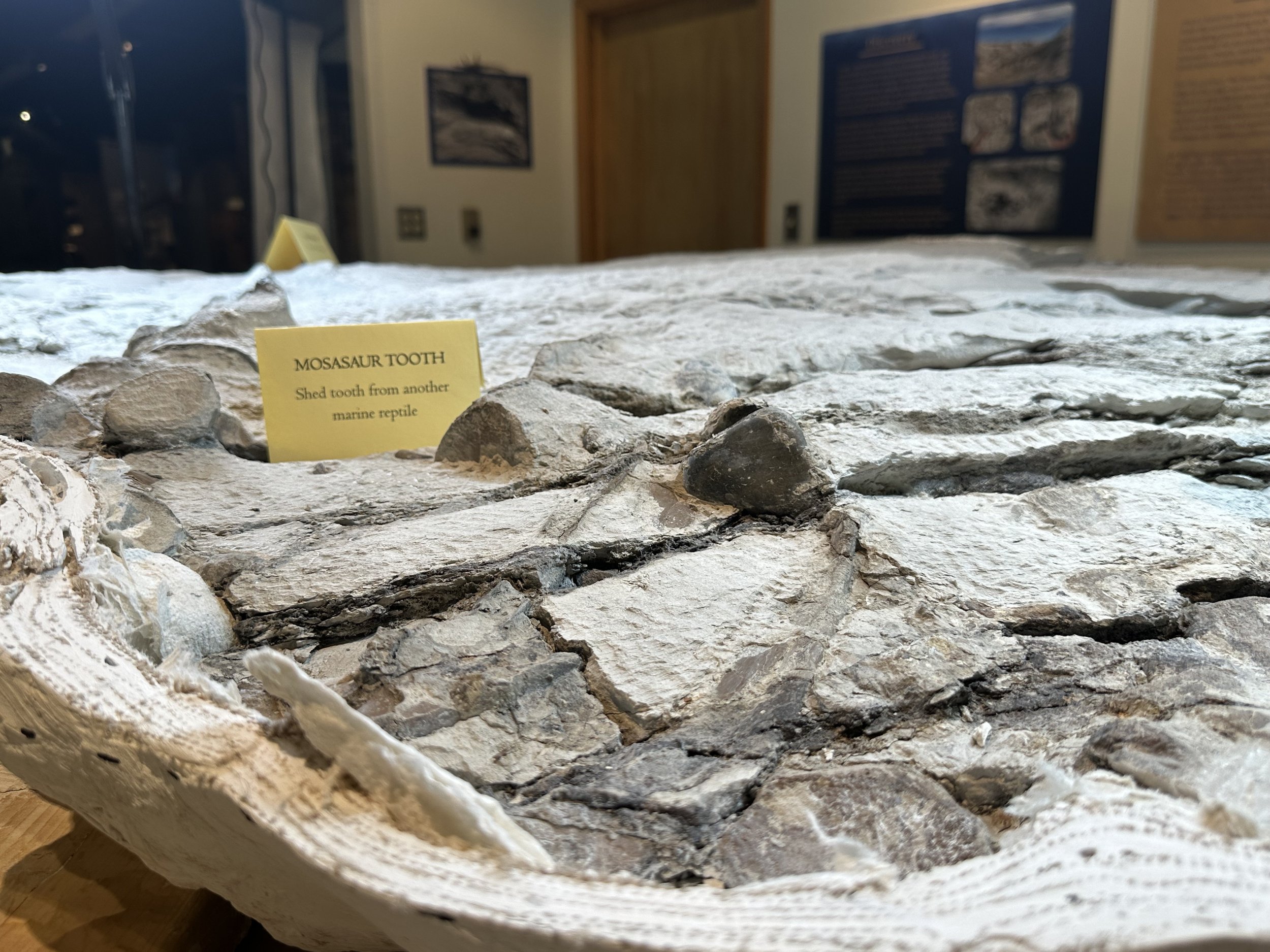
Guests can watch an elasmosaur skeleton being carefully prepared for research and display. While the fossil would measure nearly 30 feet if fully laid out, it currently rests in a giant, thousand-pound field jacket, undergoing detailed, meticulous work.
Learn About Elasmosaurs. Elasmosaurs were marine reptiles with slender necks of more than 70 vertebrae, tiny heads, long flippers, and short, powerful tails. They lived alongside dinosaurs but were a distinct group in the Mesozoic seas. This exhibit shows how scientists study their anatomy, behavior, and ancient environments, helping us better understand life in the Cretaceous oceans.
A Rare and Significant Fossil. This elasmosaur, likely a Styxosaurus, comes from the Smoky Hill Chalk, a formation whose remarkable marine fossils are displayed in museums around the world. It is only the second elasmosaur skull known from the state, following the first complete skull discovered in 1890. The region’s elasmosaur history stretches back to Dr. Turner’s 1867 discovery at Fort Wallace, which yielded the first skeleton, though it lacked a complete skull.
Meet the Paleontologist. Visitors can connect directly with Kristopher Super, the fossil’s discoverer and preparator, who leads the preparation and research work at the museum. Remarkably, he found this fossil on his 25th birthday, adding a personal milestone to an extraordinary discovery. See the tools he uses, observe fossils being cleaned and studied, and ask questions about the process. You’ll witness modern techniques like microscope-assisted air-abrasive prep, micro-CT scanning, and 3D modeling in action.
Explore More. For true fossil enthusiasts, we offer a complimentary tour of the museum’s new Paleontological Collections room, showcasing Kansas’s rich fossil history and ongoing research. This is a rare chance to experience paleontology up close, connecting the public directly with active research and the state’s most exciting ongoing fossil discoveries.

Kris Super beginning the painstaking process of coating the fossil in strips of burlap and plaster of paris, adding wood planks to provide support and prevent fractures, and to facilitate moving the fossil to the museum to undergo more work.